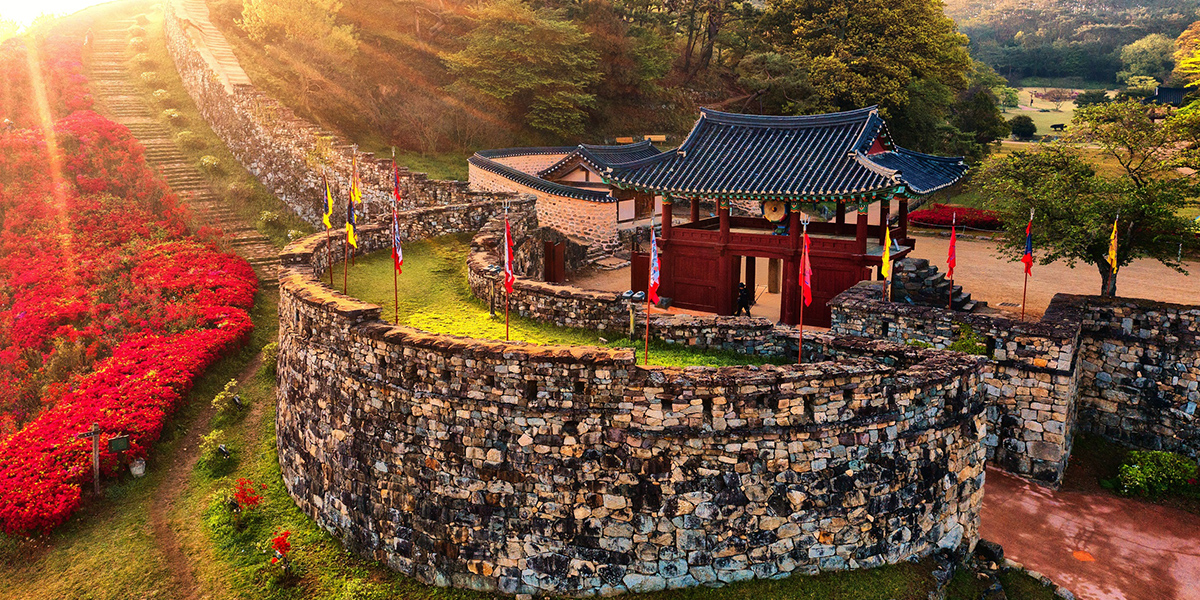
Gochang Eupseong Fortress is a stone fortress constructed in the first year of King Danjong’s reign of the Joseon Dynasty (1453) by the people of Jeolla Province as a precautionary defense against Japanese invasions. Also known as Moyangseong (牟陽城), the fortress was built as an administrative walled town (eupseong) that functioned as a forward defensive base protecting the inland Honam region, in coordination with Ipamsanseong Fortress of the Naju Jingwan system.
Designated as a Historic Site on April 1, 1965, the fortress has a total circumference of 1,684 meters, a height ranging from 4 to 6 meters, and an area of 165,858 square meters. It is equipped with three main gates (east, west, and north), three ongseong (outer defensive walls), six chiseong (bastions), and surrounding moats, forming a comprehensive and strategically significant defensive system.
Within the fortress once stood 22 government buildings from the Joseon period, including the dongheon (local magistrate’s office) and gaeksa (official guesthouse). These structures were destroyed by warfare and fires, and restoration efforts have been ongoing since 1976. According to a local legend, it is said that if one carries a stone on one’s head and walks around the fortress three times during a leap month, one will enjoy lifelong health and ascend peacefully to paradise. Owing to this belief, the traditional custom of dapseong—in which women walk along the fortress walls—continues to this day.
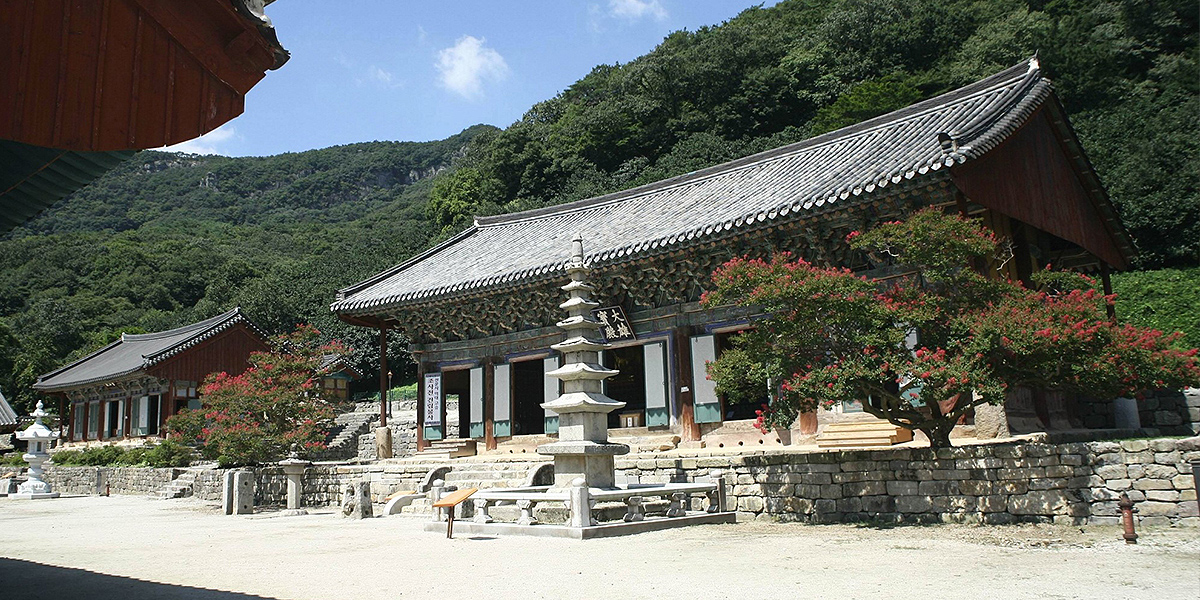
Seonunsa Temple is one of the representative Buddhist temples of Jeonbuk Province, located on Dosolsan (also known as Seonunsan) Mountain in Gochang, Jeonbuk Special Self-Governing Province. As the head temple of the 24th District of the Jogye Order of Korean Buddhism, it has long shared this status with Geumsansa Temple in Gimje. During the late Joseon period, numerous hermitages and monks’ quarters were scattered throughout the mountain, forming a magnificent Buddhist cultural landscape.
Regarding its founding, two traditions are passed down: one attributes the temple’s establishment to King Jinheung of the Silla Dynasty, while the other credits the eminent monk Geomdan with its founding in 577 (the 24th year of King Wideok of Baekje). Based on historical and geographical considerations, the latter account is generally accepted. The name “Seonun” (禪雲) reflects the idea of attaining a state of deep meditation through devoted spiritual practice.
Today, Seonunsa Temple preserves a total of 25 designated cultural assets, including National Treasures, Natural Monuments, and provincially designated cultural properties. In particular, the camellia forest behind the Daeungjeon Hall, with trees approximately 500 years old, creates a spectacular springtime view. To celebrate this camellia grove, the Camellia Arts Festival is held annually in April.